
Knee replacement surgery is performed by making an incision along the front edge of your knee and inverting your kneecap to allow access to your knee joint. Afterward, specialized cuts are made along the ends of your thigh bone, shin bone, and the undersurface of your kneecap. Once the bones have been prepared metal implants will be placed on the thigh and shin bone specific to your anatomy. A plastic liner will be placed between the two implants and in most cases, your kneecap will be replaced. Once the implants are placed your skin will be closed with dissolvable sutures and surgical mesh tape.
Total Joint Replacement Surgery
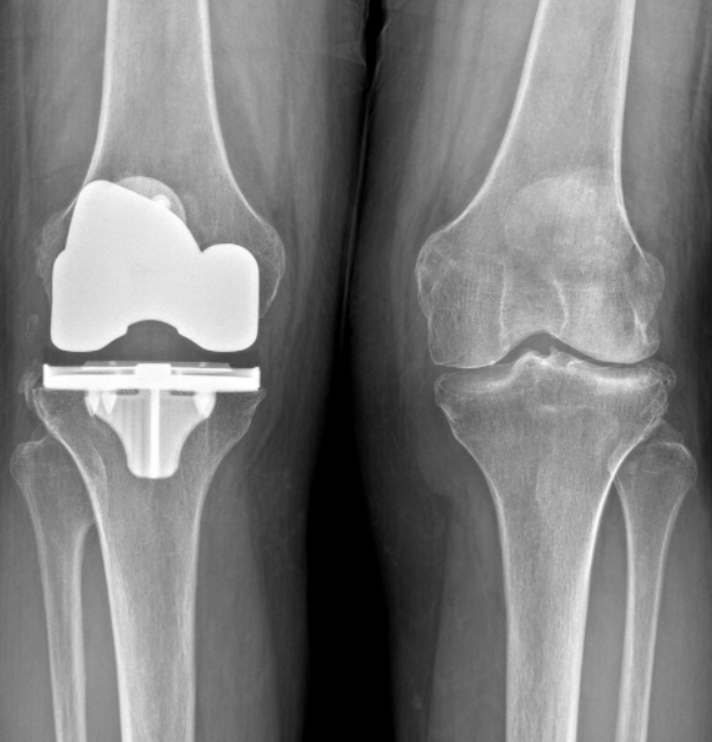
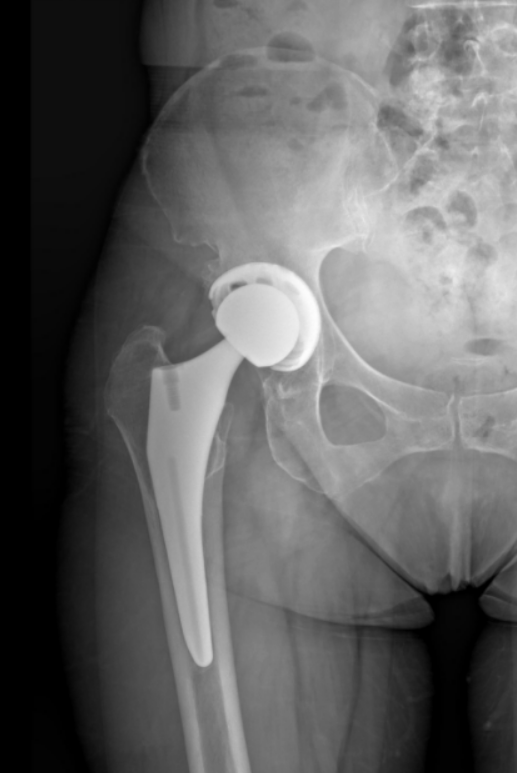
Total Hip Replacement
Hip replacement surgery is performed by making an incision along the front or back edge of the hip. Muscles surrounding the hip joint are separated to allow access to your hip joint. Your hip is then dislocated to allow better access to the “cup” or acetabulum. Bony spurs and remaining cartilage are removed from this area and a metal cup and plastic liner are placed in the acetabulum. The head of the femur is then removed, and a metal stem and a plastic head are placed on the femur. The hip is relocated and you are taken through some range of motion exercises to ensure that it is a stable joint. Once the implants are placed your skin will be closed with dissolvable sutures and surgical mesh tape.
Total Hip Replacement - OrthoInfo - AAOS
What Is Robotic Assisted Total Knee Replacement?
Robotic-assisted surgery is specific to knee replacement only at this time and is now offered in our state-of-the-art Fishhawk surgery center. In some cases when there is severe arthritis or deformity, your surgeon may choose to perform your knee replacement with assistance from a surgical robot. This will involve you obtaining a preoperative CT scan in order to gain a 3D view of your knee. This CT scan will allow the robot to assist your surgeon in making very specific cuts on the bone, to ensure an appropriate implant is used. Your surgeon will speak with you during your office visit if you are a candidate for robotic-assisted surgery.
What Type Of Approach Is Used For The Total Hip Replacement?
Total hip replacement can be performed via anterior or posterior approach. At Orthopaedic Medical Group we are equipped to offer both approaches depending on your medical history, and surgeon preference.
How Long Does Surgery Take?
Total knee replacement surgery can take roughly 45-90 minutes while total hip replacement surgery typically takes 30-60 minutes.
What Are My Options For Anesthesia?
The type of anesthesia used for your surgery is based on your medical history, as well as the physician and anesthesiologist preference. Total joint replacement surgery is safely performed under general anesthesia as well as spinal anesthesia. In both cases, you will be completely asleep in the operating room.
Spinal Anesthesia
- IV sedation is given, and an injection is placed into your back to numb your legs
- In most cases, this type of anesthesia does not require a breathing tube
- Medications used do not commonly cause nausea/dizziness, which allows you to begin therapy faster & decrease pain
For either type of anesthesia you will be completely asleep during surgery
General Anesthesia
- Uses IV sedation and gasses to put you to sleep
- Requires a breathing tube, which commonly causes a sore throat after surgery
- Medications used commonly cause nausea/dizziness, which can last for 24 hours after surgery